Research
Zydus’ research capabilities are anchored in a strong science-led approach, focused on discovering and developing innovative and differentiated therapies. With integrated research infrastructure and multidisciplinary expertise, the Company advances programmes across new chemical entities (NCEs), biologics, vaccines and complex generics. Its research efforts are directed towards addressing unmet medical needs and improving patient outcomes across key therapeutic areas.

New Chemical Entities

Biologics

Vaccines
Discovery and Development
Zydus has established robust capabilities across the research continuum—from early discovery and pre-clinical development to clinical research and regulatory pathways. Zydus has developed novel therapies such as Lipaglyn (Saroglitazar), India’s first indigenously discovered NCE, and Desidustat, an oral therapy for anaemia in chronic kidney disease, alongside a growing portfolio of monoclonal antibodies, antibody drug conjugates and next-generation biosimilars.
Technology and Innovation
Research at Zydus is further strengthened by the adoption of advanced technologies, including digital tools, data analytics and platform-based approaches to accelerate development timelines and improve precision. Zydus continues to invest in its research ecosystem through collaborations, partnerships and specialised centres of excellence. This integrated and innovation-driven approach enables Zydus to translate scientific discovery into accessible, high-quality therapies, expanding access and improving patient outcomes worldwide.
Collaborate with Us
Zydus actively seeks to build meaningful collaborations that advance research, accelerate innovation and expand access to healthcare solutions. With a strong foundation in science and an integrated research ecosystem, the Company partners across the pharmaceutical value chain to co-create and develop differentiated therapies.
Zydus is open to exploring opportunities across collaborative research and development, in-licensing of technologies and new molecular entities, as well as out-licensing and co-development of its drug candidates. These partnerships are aimed at addressing unmet medical needs, leveraging complementary capabilities and bringing innovative therapies closer to patients worldwide.
please connect with our Business Development team:
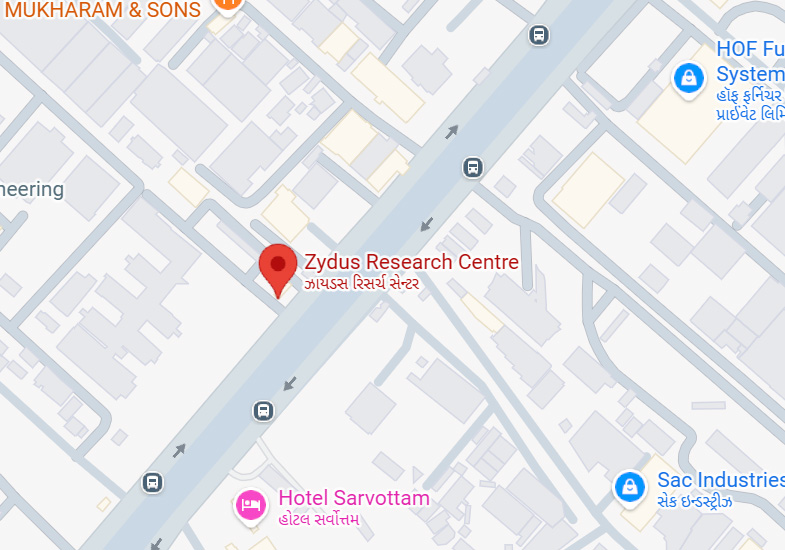
Location
Zydus Research Centre
Sarkhej–Bavla N.H. No. 8A
Moraiya, Ahmedabad – 382210
Gujarat, India.
Contact
Phone: +91-2717-665555
Fax: +91-2717-665353